Innovation Automation Vendors Serve Products & Services

Inherent Conflict
The dynamics of a service business and innovative product business are dramatically different. Established product companies tend to emphasize the practices and culture they know best when they move into services. The tendency is to find synergies based on their products that become the recommended solutions for customers. Additionally, it can be more difficult for a product company who provides services to be the champion for the customer when there is a problem with the product being implemented.

Ideal Product Company Focus

I believe that product companies should always be striving to eliminate implementation and operations labor with improved and innovative automation technology. There is an inherent conflict by having a company that provides services and products.

refer to:http://www.automation.com/portals/factory-discrete-automation/can-automation-vendors-serve-two-masters-products-services

Posted in Uncategorized | Tagged , , , , | Leave a comment

Acrosser unveils its ultra slim fanless embedded system with 3rd generation Intel core i processor

acrosser Technology Co. Ltd, a world-leading industrial and embedded computer designer and manufacturer, announces the new AES-HM76Z1FL embedded system. AES-HM76Z1FL, Acrosser’s latest industrial endeavor, is surely a FIT under multiple circumstances. Innovation can be seen in the new ultra slim fanless design, and its Intel core i CPU can surely cater for those seeking for high performance. Therefore, these 3 stunning elements can be condensed as “F.I.T. Technology.” (Fanless, Intel core i, ultra Thin)

The heat sink from the fanless design provides AES-HM76Z1FL with great thermal performance, as well as increases the efficiency of usable space. The fanless design provides dustproof protection, and saving the product itself from fan malfunction. AES-HM76Z1FL has thin client dimensions, with a height of only 20 millimeters (272 mm x183 mm x 20 mm). This differs from most embedded appliances, which have a height of more than 50 millimeters.

The AES-HM76Z1FL embedded system uses the latest technology in scalable Intel Celeron and 3rd generation Core i7/i3 processors with a HM76 chipset. It features graphics via VGA and HDMI, DDR3 SO-DIMM support, complete I/O such as 4 x COM ports, 3 x USB3.0 ports, 8 x GPI and 8 x GPO, and storage via SATA III and Compact Flash. The AES-HM76Z1FL also supports communication by 2 x RJ-45 gigabit Ethernet ports, 1 x SIM slot, and 1 x MinPCIe expansion socket for a 3.5G or WiFi module.

Different from most industrial products that focus on application in one specific industry, the AES-HM76Z1FL provides solutions for various applications through the complete I/O interfaces. Applications of the AES-HM76Z1FL include: embedded system solutions, control systems, digital signage, POS, Kiosk, ATM, banking, home automation, and so on. It can support industrial automation and commercial bases under multiple circumstances.

Key features:
‧Fanless and ultra slim design
‧Support Intel Ivy Bridge CPU with HM76 chipset
‧2 x DDR3 SO-DIMM, up to 16GB
‧Support SATA III and CF storage
‧HDMI/VGA/USB/Audio/GPIO output interface
‧Serial ports by RS-232 and RS-422/485
‧2 x GbE, 1 x SIM, and 1 x MiniPCIe(for3G/WiFi)

Product Information:
http://www.acrosser.com/Products/Embedded-Computer/Fanless-Embedded-Systems/AES-HM76Z1FL/Intel-Core-i3/i7-AES-HM76Z1FL.html

Contact us:
http://www.acrosser.com/inquiry.html

Posted in Uncategorized | Tagged , , , , | Leave a comment

Reliability for harsh environments

For COM Express to deliver real business benefit, it has to provide one other vital attribute: reliability. We are in the era of “always on” computing: The lights must never go out. And downtime means lost revenue. That’s a challenge in the harsh, hostile environments in which many critical infrastructure systems operate. Today’s connected world paradigm does not make a distinction between systems in stable environments such as offices and data centers, and systems deployed in harsh environments found in heavy industry, on factory floors, on drilling rigs, or on transportation systems.

These extreme industrial conditions require a ruggedized COM Express module. Specifically, they must operate in temperatures as low as -40 oC and as high as +85 oC – temperatures that are often found in oil and gas operations, for example. They must also withstand shock of up to 40g and extreme vibration from machinery or aircraft engines. Conformal coating is needed to resist the moisture, dust, and chemicals typical of industrial environments.

Designing, testing, qualifying, and manufacturing modular architectures for deployment in the hostile environments found in many critical infrastructure systems in industry is, therefore, a painstaking and rigorous process – but it is essential if maximum reliability and uptime are to be achieved. Modularity is helpful: By separating the processing module from the I/O carrier board, manufacturers can ensure that all the components on the processing module are specifically selected to meet application-specific extended temperature, shock, and vibration levels. It also becomes easier to test the module at maximum performance stress that can, for example, help the designers to reach an optimal heat sink solution with a uniform temperature profile early in the design cycle.

refer to:http://industrial-embedded.com/articles/rugged-increasingly-connected-world/

Posted in Uncategorized | Tagged , , , , | Leave a comment

Transitioning to new standards using model-based design

Introduction to model-based design

With model-based design, UAV engineers develop and simulate system models comprised of hardware and software using block diagrams and state charts, as shown in Figures 1 and 2. They then automatically generate, deploy, and verify code on their embedded systems. With textual computation languages and block diagram model tools, one can generate code in C, C++, Verilog, and VHDL languages, enabling implementation on MCU, DSP[], FPGA[], and ASIC hardware. This lets system, software, and hardware engineers collaborate using the same tools and environment to develop, implement, and verify systems. Given their auto-nomous nature, UAV systems heavily employ closed-loop controls, making system modeling and closed-loop simulation, as shown in Figures 1 and 2, a natural fit.
Testing actual UAV systems via ground-controlled flight tests is expensive. A better way is to test early in the design process using desktop simulation and lab test benches. With model-based design, verification starts as soon as models are created and simulated for the first time. Tests cases based on high-level requirements formalize simulation testing. A common verification workflow is to reuse the simulation tests throughout model-based design as the model transitions from system model to software model to source code to executable object code using code generators and cross-compilers.

Used during system design
Reused as an entry point for software design
Elaborated on during detailed software design (for example, by discretizing continuous time blocks and changing double-precision data to single-precision or fixed-point)
Used as input for embedded code generation
The test cases for system requirement validation likewise are reused on the model, source code, and executable object code to perform functional testing and collect coverage metrics.

While not advocating for any particular mapping, the use and reuse of models for systems and software design along with code generation have long provided UAV system developers using MathWorks products of Simulink and Embedded Coder with streamlined processes. It is nice to see that this same approach is now clearly acknowledged as an acceptable means to certification by the governing standards. MathWorks provides verification tool qualification kits and workflow guidance regarding the use of model-based design for DO-178.

refer to:
http://mil-embedded.com/articles/transitioning-do-178c-arp4754a-uav-using-model-based-design/


Posted in Uncategorized | Tagged , , , , | Leave a comment

Asia claims almost half of Industrial automation computer sales

One of the key areas of opportunity is the power industry, where the booming consumer and industrial power markets in developing economies such as China and India have created rocketing demand. In China the per capita energy use is still a long way behind most of Western Europe, meaning the potential for growth is still huge. Without question, Asia represents a perfect storm of opportunities for Industrial automation.

In order to help businesses better understand how to take advantage of the current climate and increase their industrial automation sales in Asia, particularly China, the CC-Link Partner Association (CLPA) is hosting a seminar entitled ‘Gateway to China’. The event will take place on 24th September at the Mitsubishi Electric Europe Tokyo Conference Suite in Hatfield.

For more information on the speakers and to book tickets for the event, visit the CLPA’s EventBrite page gateway-to-china.eventbrite.co.uk/.

In light of the sensitive current economic climate, many Asian companies are taking a more careful approach to investment – they are becoming more demanding towards their suppliers and making more enquiries before purchasing. Furthermore, according to IHS’ research, several Chinese manufacturers are currently developing products which are in direct competition with the ones provided by Western suppliers of industrial automation. These are only a few of the obstacles facing European vendors who want to penetrate the Asian market to change the way they do business.

Flexibility and the ability to respond to very specific demands are becoming essential factors when dealing with the Asian market. Being able to offer technologies and products which are compatible with the needs of Asian clients is no longer an option, it’s a must.

refer to:http://www.connectingindustry.com/automation/asia-claims-almost-half-of-automation-sales.aspx

Posted in Uncategorized | Tagged , , , , | Leave a comment

Factors That Affect Your Salary – What You Need To Know

The job function of the typical survey respondent was an automation/control engineer, accounting for 28.2% of total responses. The most prominent average age range was 45–54, indicated by 34.1% of respondents. Nearly half (45.6%) of the respondents were college graduates with a bachelor’s degree, with the largest percentage of those (36.5%) possessing a bachelor’s degree in electrical engineering. Of the respondents, 16.3% have an advanced degree, of which the largest percentage (28.4%) acquired a business administration degree.

The largest percentage of respondents (25.6%) has 31 or more years of professional work experience. It is interesting to note that the largest percentage of respondents (nearly one quarter or 24.8%) has worked for their current employer two years or fewer.

Of the respondents, 78.3% (up 4% over last year) reported a salary increase this year, with the largest percentage (50.6%) seeing a 1%–3% increase. At least a portion of the compensation of 64.7% of our respondents came in the form of commissions or bonuses, with 38.5% of respondents reporting that 1%–10% of their salary is commissions or bonuses. The largest percentage of respondents (35.3%) clocked between 41 and 45 hours per week, and the average vacation time was three weeks per year. Now, the article will dive a little deeper into the solutions.

refer to:http://www.automation.com/factors-that-affect-your-salary-what-you-need-to-know

Posted in Uncategorized | Tagged , , , , | Leave a comment

Using Automation To Control Assets

A good cellular automation solution based on TCP/IP networking provides anywhere/anytime connectivity and also offers security features that meet the most stringent requirements of industrial standards associations. Cellular automation is a cost-effective solution to customer problems, which integrating cellular data networking to enable SCADA data to be securely communicated from the networking back to the control center, thereby improving safety, productivity and profitability.

Today, most – if not all – remote sites contain legacy serial devices that need to be converted to IP-based services. Some of these devices require special treatment by the gateways they are attached to so that the serial interface can be properly converted to IP, but most solutions don’t offer that type of flexibility.

refer to:http://pipelineandgasjournal.com/using-cellular-automation-monitor-and-control-assets


Posted in Uncategorized | Tagged , , , , | Leave a comment

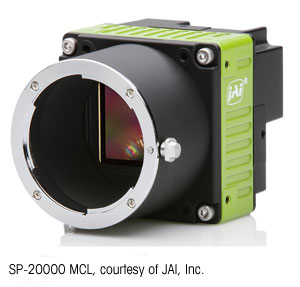
color machine vision solutions

If you need absolute color accuracy of less than 1%, then we usually look at a three-CCD prism camera solution. If spatial accuracy over a wide inspection area is more important, then a very-high-resolution single-chip Bayer camera may be better. If you need high speed, CMOS offers higher frame rates and multi-line sensors with NIR capability and is very effective for high-speed printing applications where colorimetry measurements are very important because NIR can help you judge between true black ink and black made by combining cyan-magenta-yellow inks. And for some printing applications, knowing the difference is important for quality purposes.”

This means that an optic for a more expensive three-chip solution may also be more expensive because it requires an optic that uses more layers of optical materials to correct for the chromatic aberration, prism, and other sources of optical distortion. And while some might think you can correct this sort of distortion in software, it may not be that easy. “If you knew the exact part dimensions and colors, maybe you could correct the image using look-up tables, but any change in color, shape, or lighting could throw that correction off,” Hollows adds.

For imaging applications that need to measure multiple colors, white LED lights have supplanted halogen and fluorescent lights for a number of reasons, including LEDs’ ability to offer a wider range of colors and varieties of “white” light, also referred to as the color temperature.
“We offer white LEDs that run from cool blue-whites around 6500 Kelvin to neutral whites around 4000 K to warm whites at 2200 K that have more red in them,” says Oliver Szeto, President of Metaphase Technologies Inc. (Philadelphia, Pennsylvania). “While we see a lot of machine vision applications use the 6000 K cool whites because of high output, there’s also a trend toward lights that more closely mimic natural sunlight, around 3500 K.” For color machine vision applications that require accurate color measurements, a light’s color rendering index (CRI) is important because it quantifies how closely the light will reproduce colors compared to a reference light source, usually daylight.

refer to:http://www.visiononline.org/vision-resources-details.cfm/vision-resources/Is-Your-Machine-Vision-System-Color-Blind/content_id/4333

Posted in Uncategorized | Tagged , , , , | Leave a comment

Optimization And Operations Remot Networking

Offshore operations

The Situation: A leading global producer of crude oil and natural gaslooked for a way to stay ahead of dynamic market demands and overcome challenges associated with offshore oil and gas Automation. As part of an innovative technology project and with the help of Honeywell, this company built a Solutions to help coordinate control of multiple offshore platforms in the North Sea, and improve operations and efficiency.

The Situation: As a major international producer of primary and fabricated aluminum sought to enhance production and raw material efficiencies across its refining business, it turned to Honeywell to provide a standardized process control infrastructure and controlsolutions across multiple refineries in six countries.

In this particular case, the bigger-picture business goal was time to first oil enabled by an out-of-the-box, customized solution. Even bigger than that, though, is that the refiner estimates a 4-to-6 percent production increase with real-time data networking and analysis.

refer to:

http://www.automation.com/business-transformation-through-remote-collaboration-optimization-and-operations


Posted in Uncategorized | Tagged , , , , | Leave a comment

kindergarten to Kickstarter

Kickstarter projects like Ninja Blocks are shipping Internet of Things (IoT) devices based on the BeagleBone (see this article’s lead-in photo), and startup GEEKROO is developing a Mini-ITX carrier board that will turn the Raspberry Pi into the equivalent of a PC. Outside of the low barrier to market entry presented by these low-cost development platforms, maker boards are being implemented in commercial products because their wide I/O expansion capabilities make them applicable for virtually any application, from robotics and industrial control to automotive and home automation systems. As organizations keep enhancing these board architectures, and more hardware vendors enter the DIY market, the viability of maker platforms for professional product development will continue to increase.


refer to:

http://embedded-computing.com/articles/diy-pushes-open-hardware-kindergarten-kickstarter/


Posted in Uncategorized | Tagged , , , , | Leave a comment